
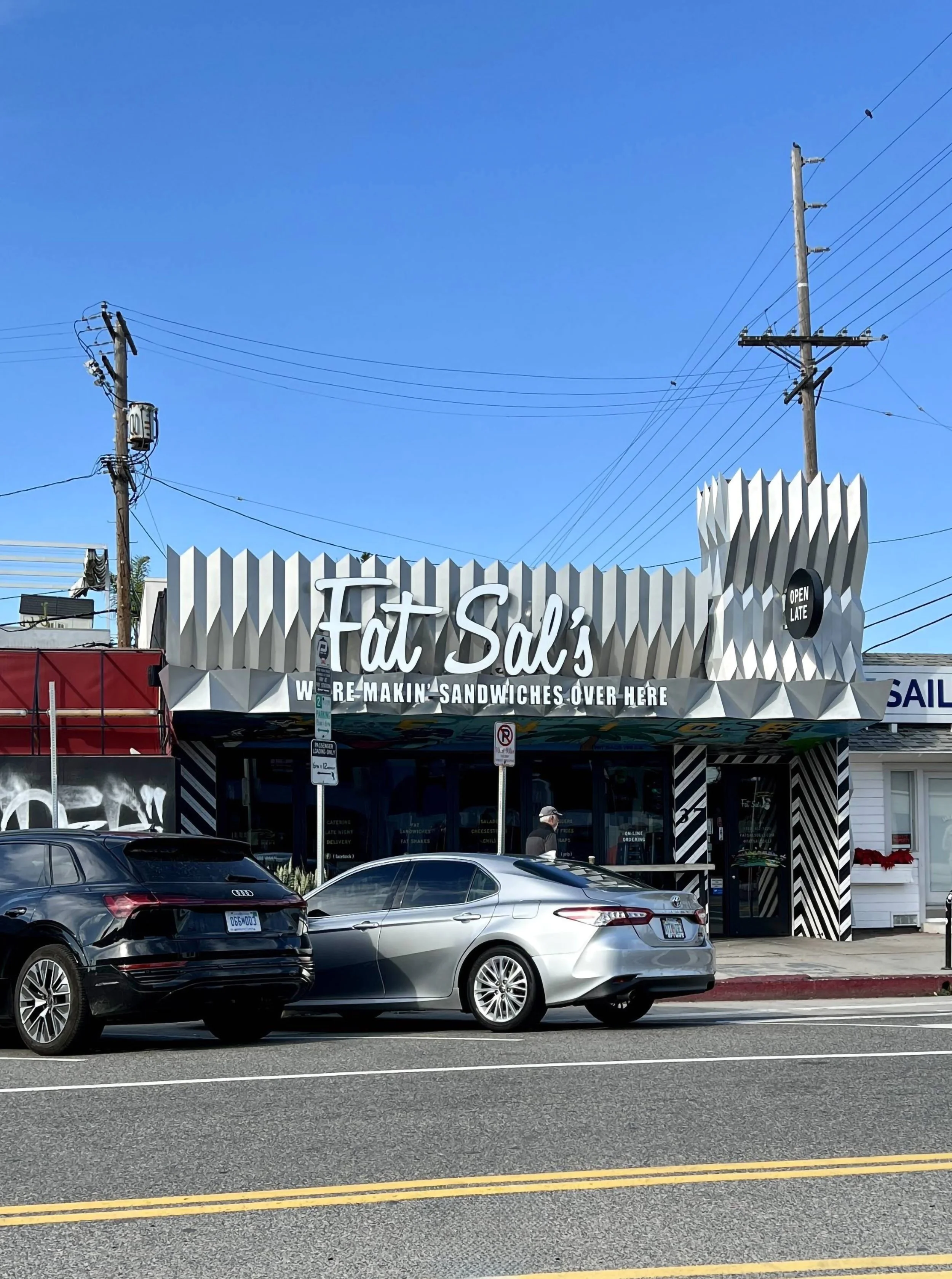
Fat Sal's Facade. Location: Venice Beach. Year: 2023. Role: Architect. Photography: Tyler McMartin.
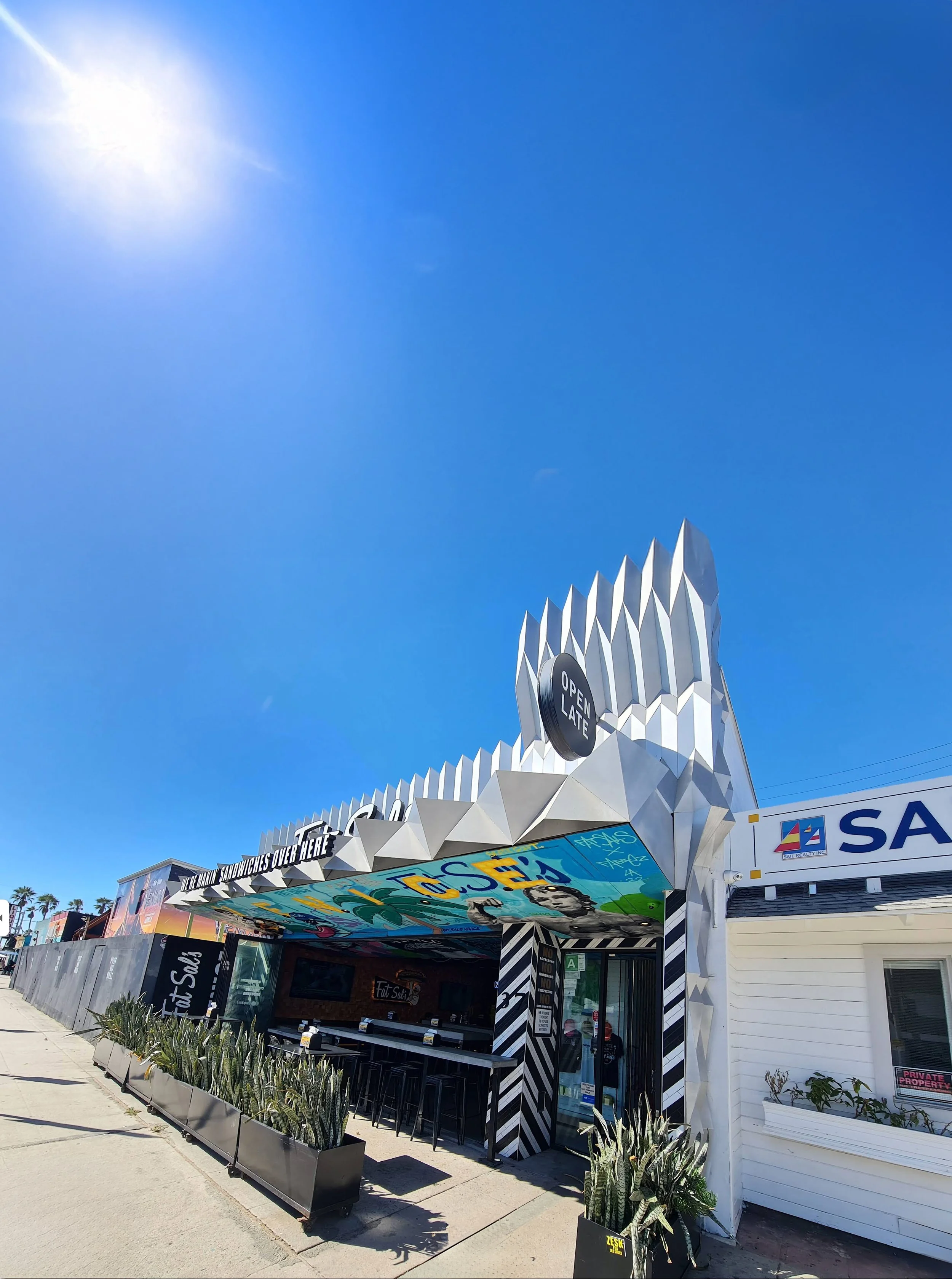
Fat Sal's Facade. Location: Venice Beach. Year: 2023. Role: Architect. Photography: Tyler McMartin.
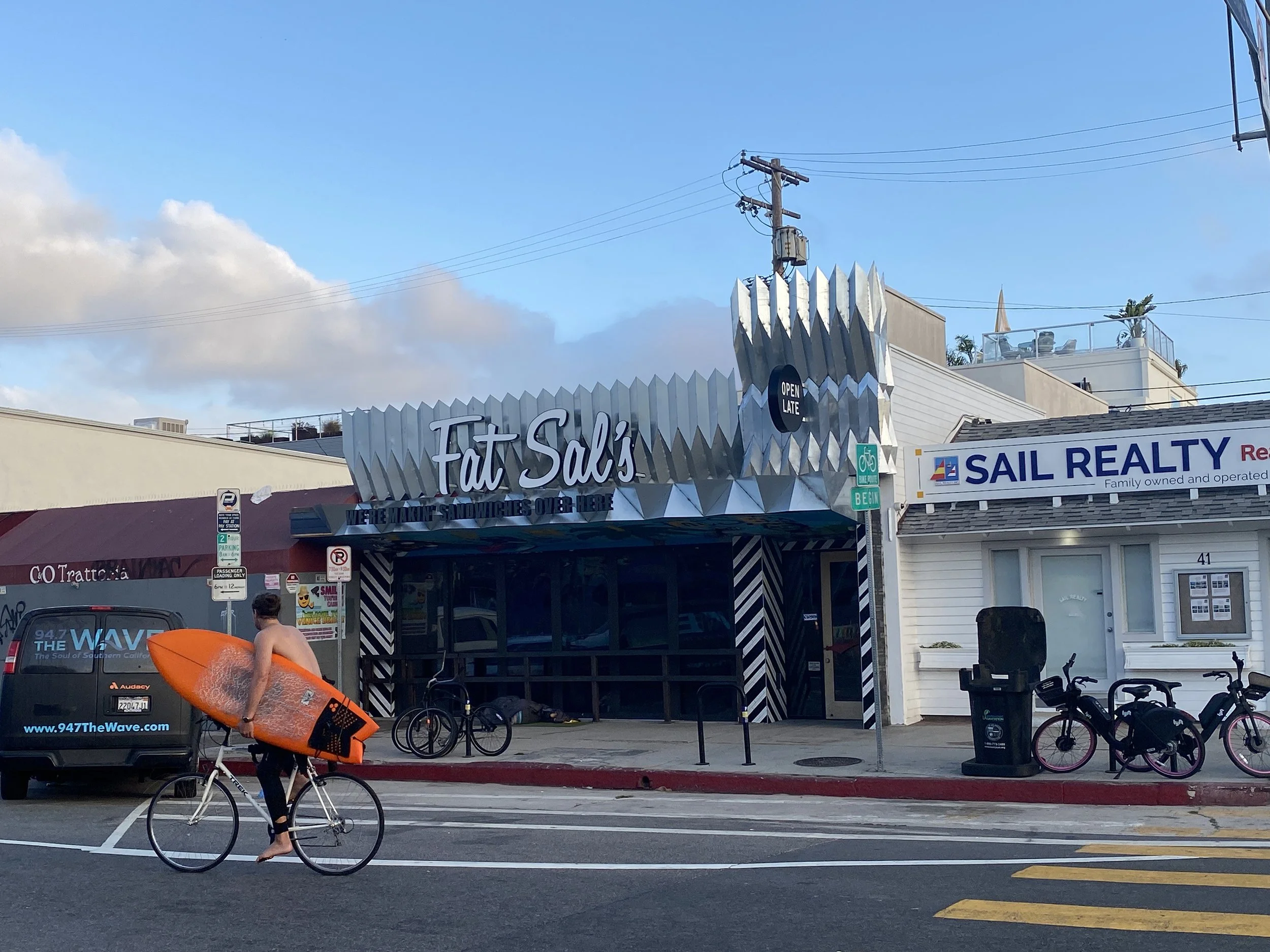
Fat Sal's Facade. Location: Venice Beach. Year: 2023. Role: Architect. Photography: Tyler McMartin.
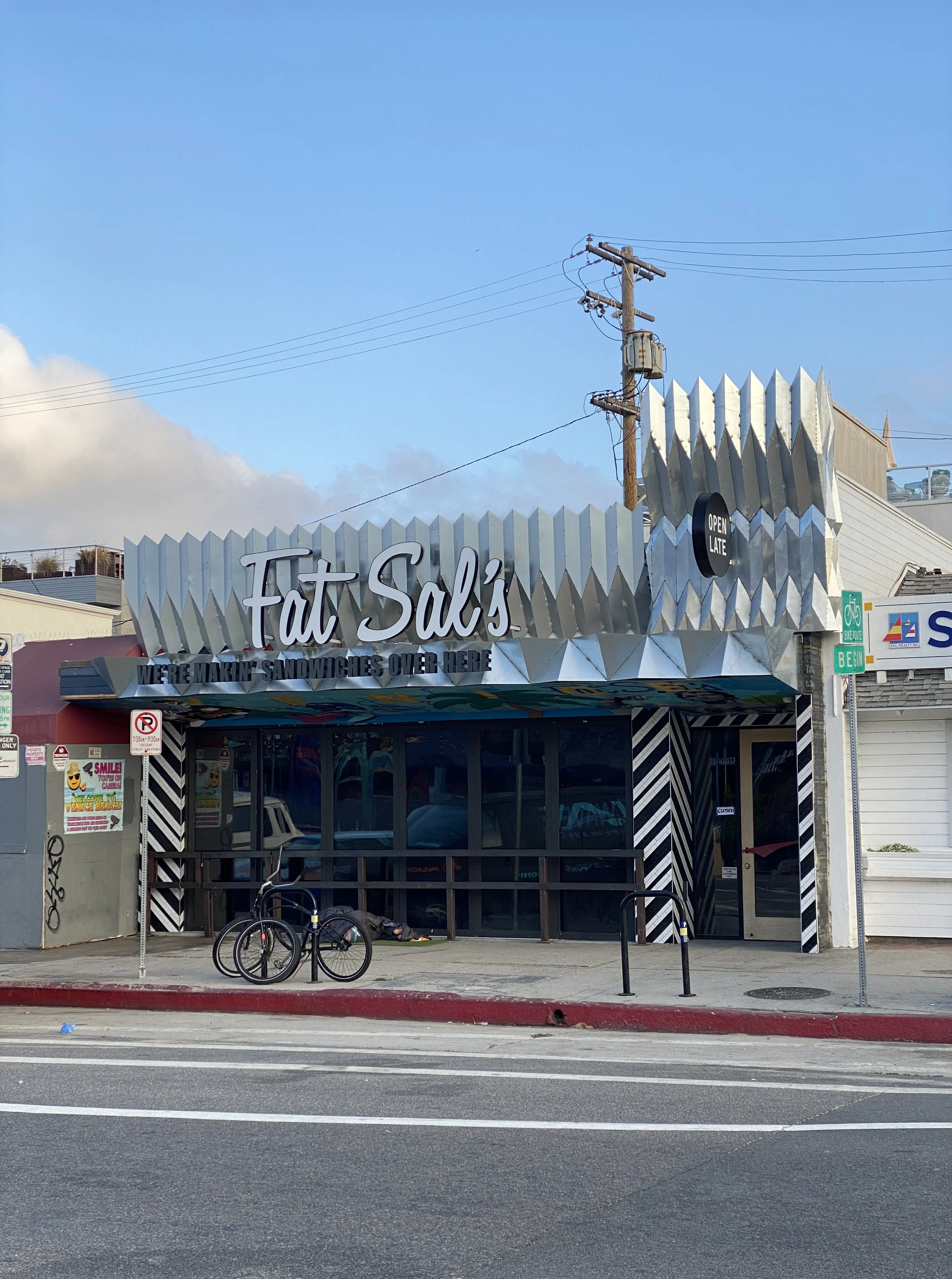
Fat Sal's Facade. Location: Venice Beach. Year: 2023. Role: Architect. Photography: Tyler McMartin.
Fat Sal's Facade. Location: Venice Beach. Year: 2023. Role: Architect. Photography: Tyler McMartin.
Fat Sal's Facade. Location: Venice Beach. Year: 2023. Role: Architect. Photography: Tyler McMartin.
Fat Sal's Facade. Location: Venice Beach. Year: 2023. Role: Architect. Photography: Norella Carboni.
Fat Sal's Facade. Location: Venice Beach. Year: 2023. Role: Architect. Photography: Tyler McMartin.
Fat Sal's Facade. Location: Venice Beach. Year: 2023. Role: Architect. Photography: Norella Carboni.
Fat Sal's Facade. Location: Venice Beach. Year: 2023. Role: Architect. Photography: Tyler McMartin.
Team: Belen Rodero
Fabrication and assembly: Base Collaborative, Norella Carboni and Kasey Amiel
Location: Venice Beach, Los Angeles, California
“In architecture, the false front (also false facade, flying facade, screen wall) is a façade designed to disguise the true characteristics of a building, usually to beautify it”.*
Many historical examples show that the false façade is a recurrent technique used by architects, from the Pantheon of Agrippa in Rome—where a classical Greek façade is added to a circular building—to the more recent Western false-front architecture in the United States, where banks and saloons featured façades with greater ornamentation than the other sides of the building.
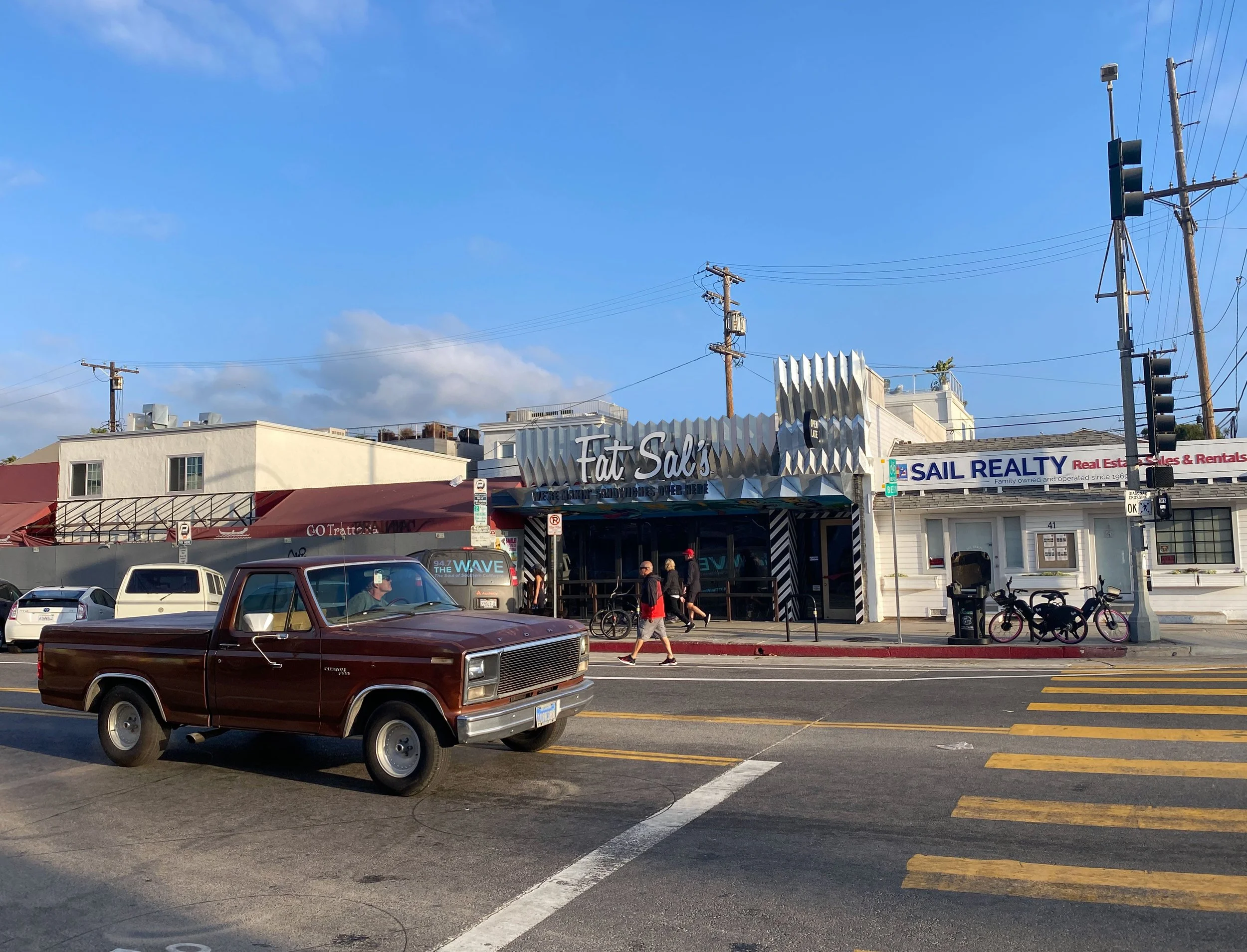
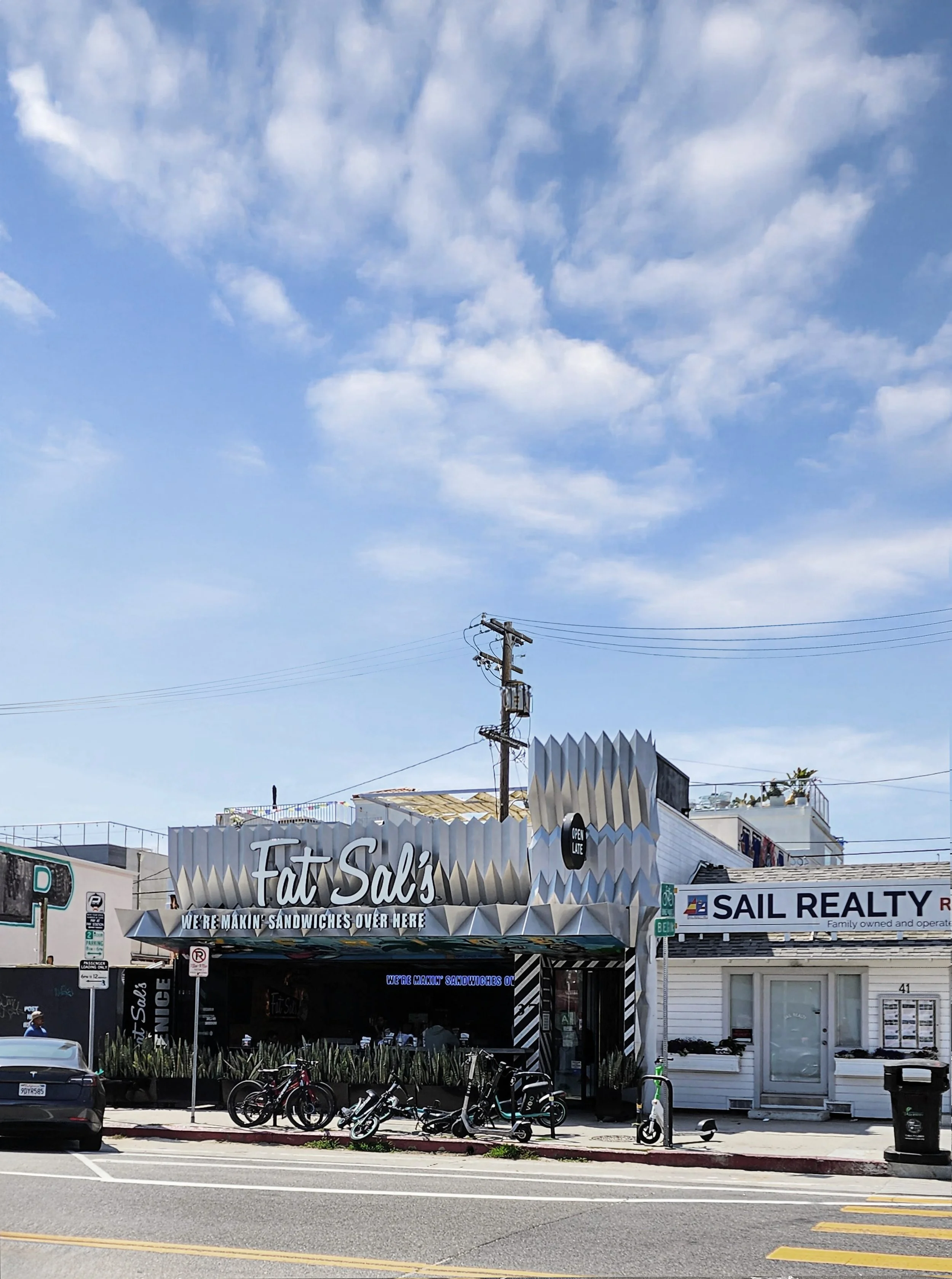
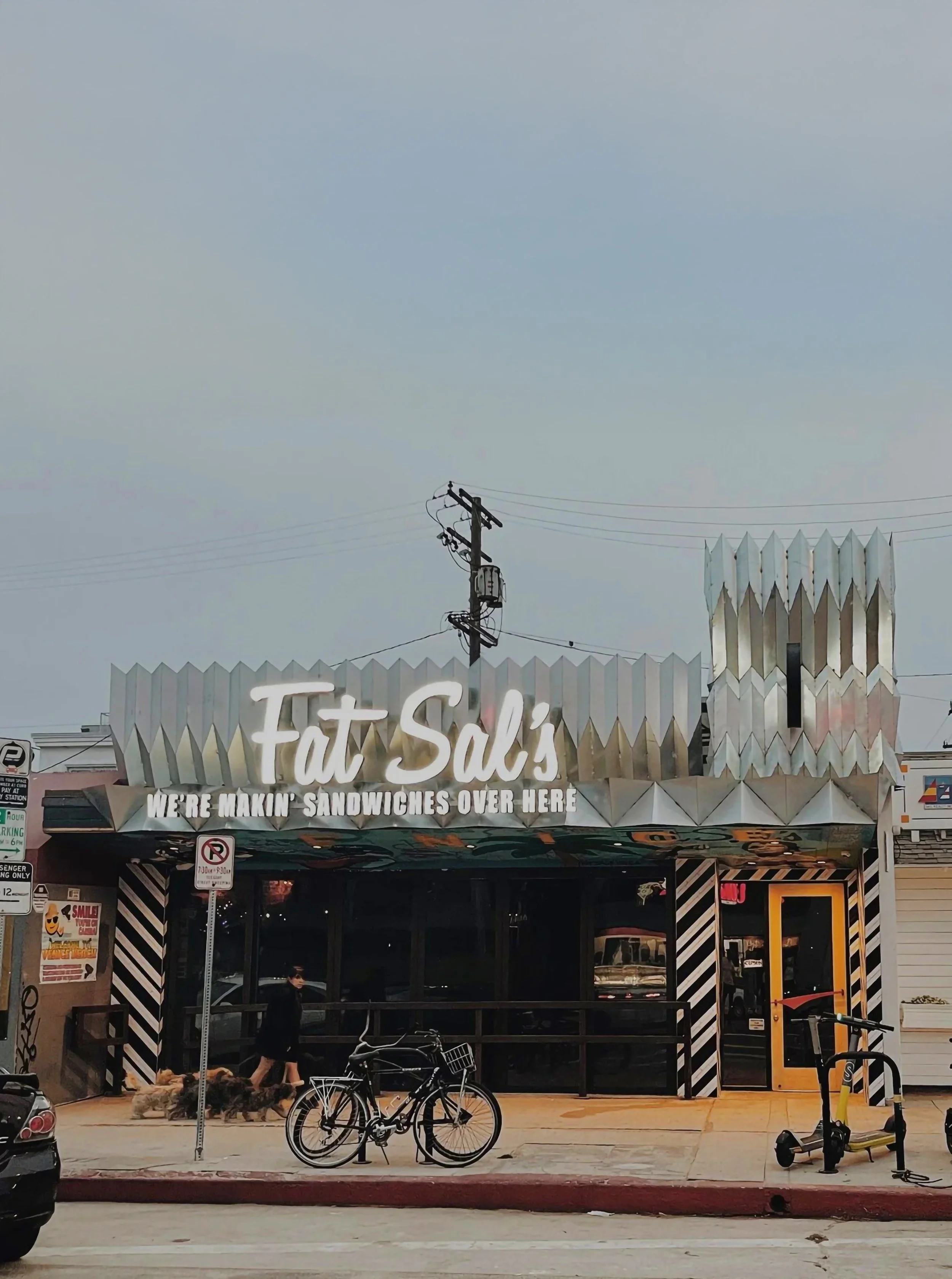
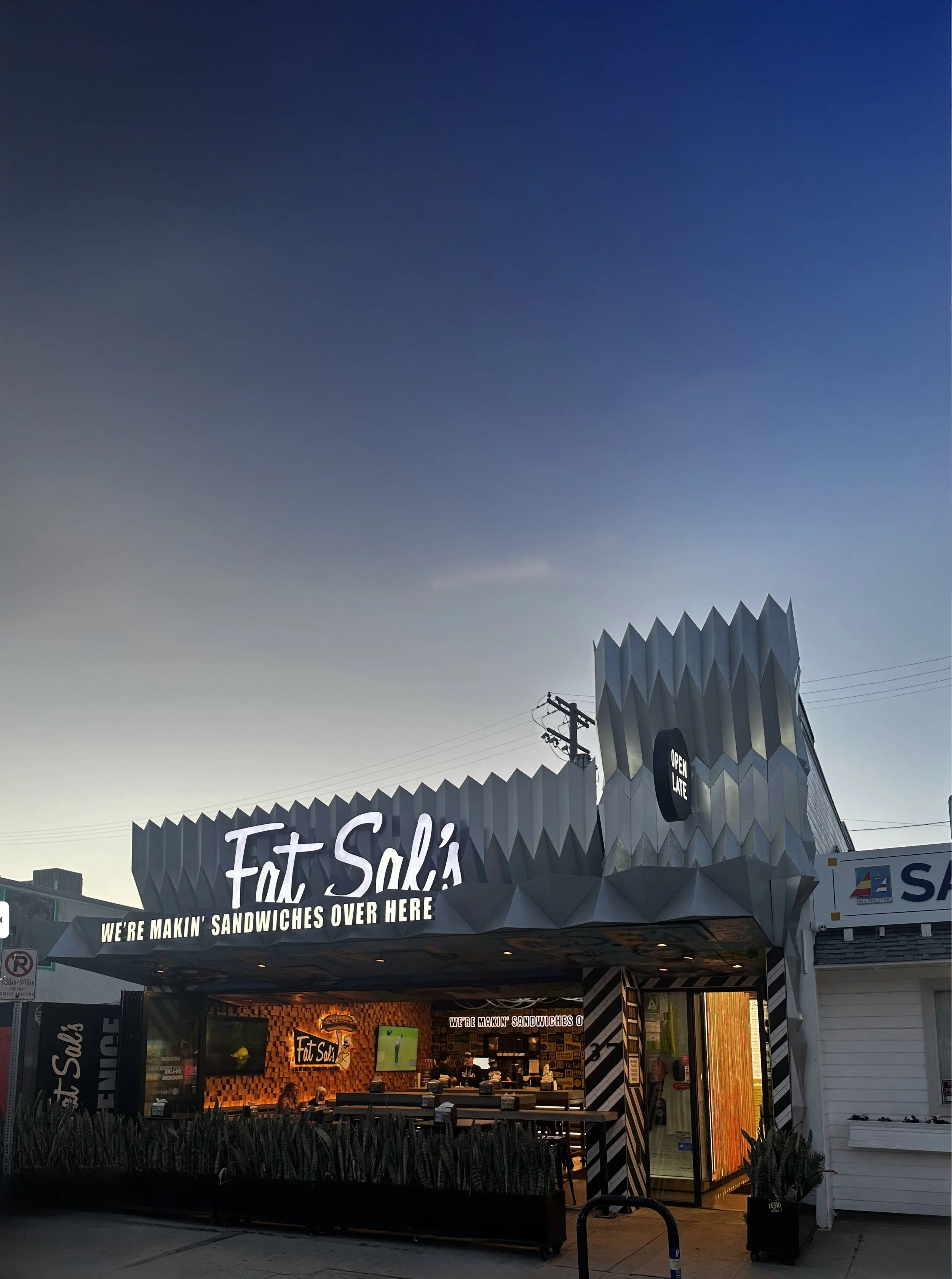
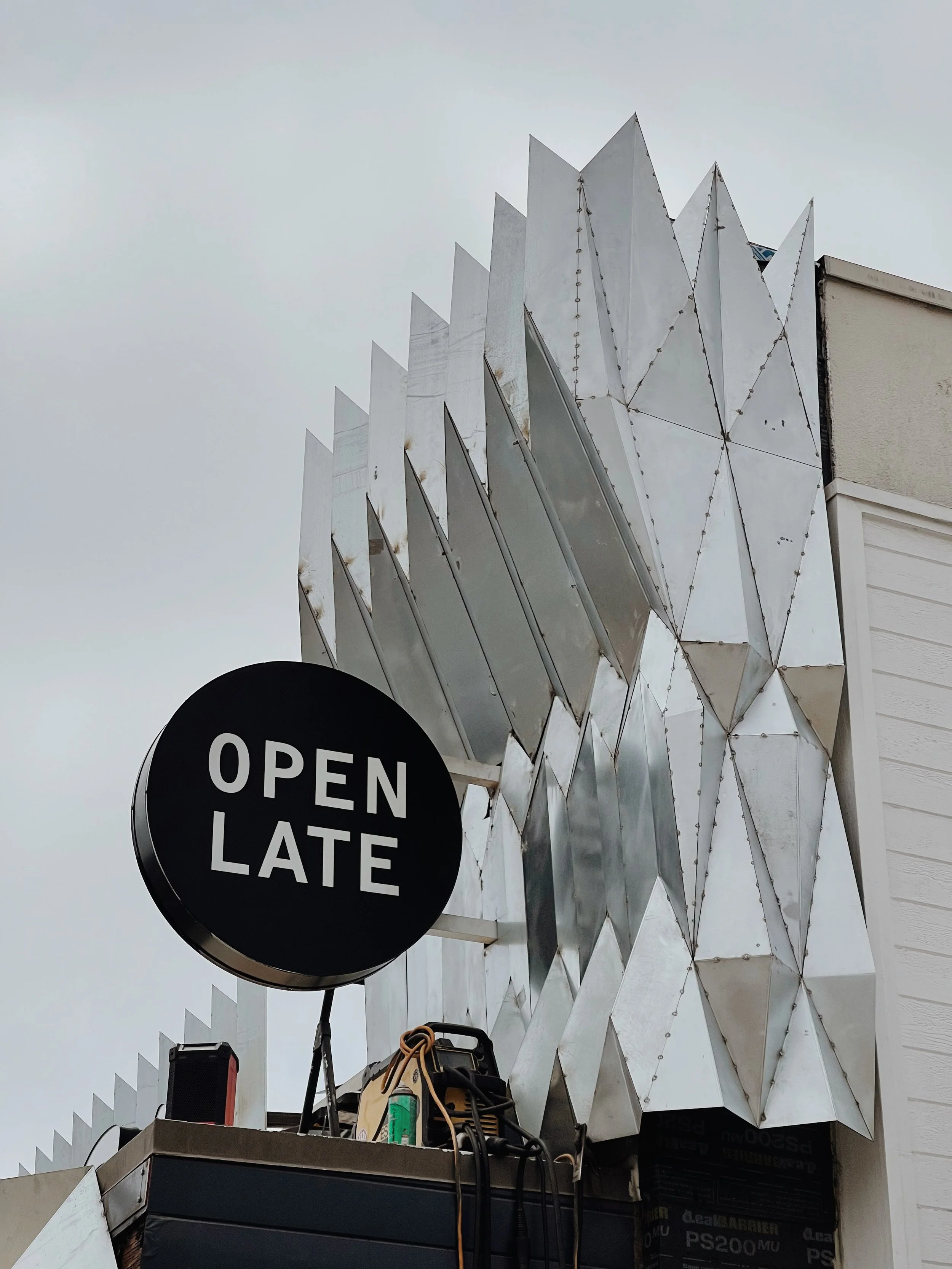
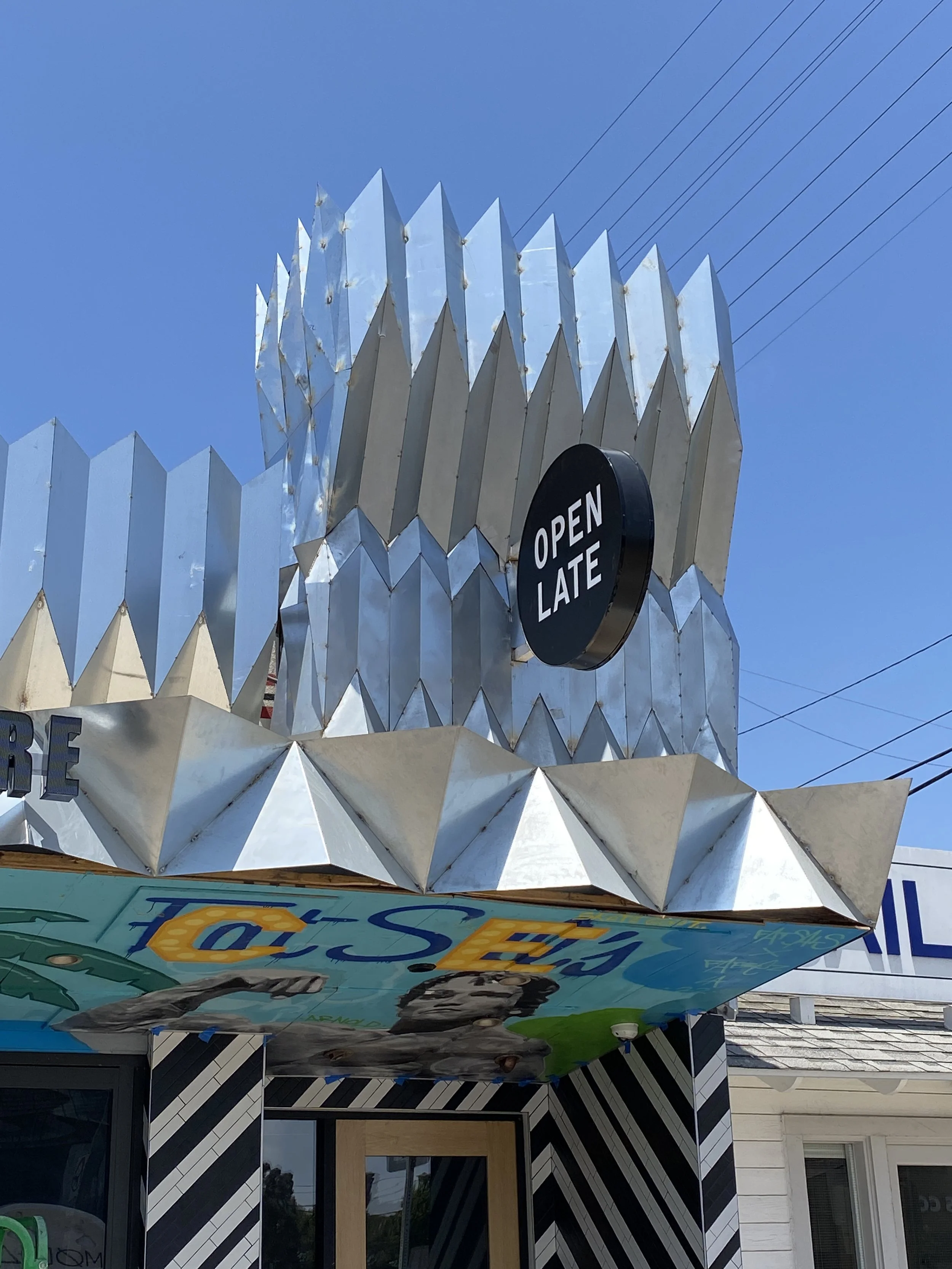
The goal for Fat Sal’s Deli was to create a striking façade to attract attention in the vibrant Venice Beach area of Los Angeles. The existing structure was a dull stucco box, with a vertical volume taller than the rest of the building. The approach was to “dress” the façade like an origami garment, allowing the ever-changing light of Los Angeles to become part of the design. As the light shifts, it constantly alters the building’s appearance: in the morning, it sharpens the edges, while in the evening, the geometry appears flatter.
The geometry of the design echoes Art Deco angles found in some of the most beautiful buildings in Los Angeles, such as those designed by Lloyd Wright.
The façade is constructed from sheet aluminum, pleated offsite and welded onsite. It required a skilled team to weld each piece at the precise angle to follow the pattern, much like a tailor stitches the pieces of a garment.
The result is a false façade with an unusual appearance that, like many things in the world, fits perfectly in Venice Beach, California.
*Ching, Francis D. K. (2011-12-30). A Visual Dictionary of Architecture